Kartoza - Building Energy Planning Capacity in Nigeria: Reflections on EMP-N 2025
Recap of EMP-N 2025 in Abuja: Supercharging Nigeria's energy planning with geospatial data training!
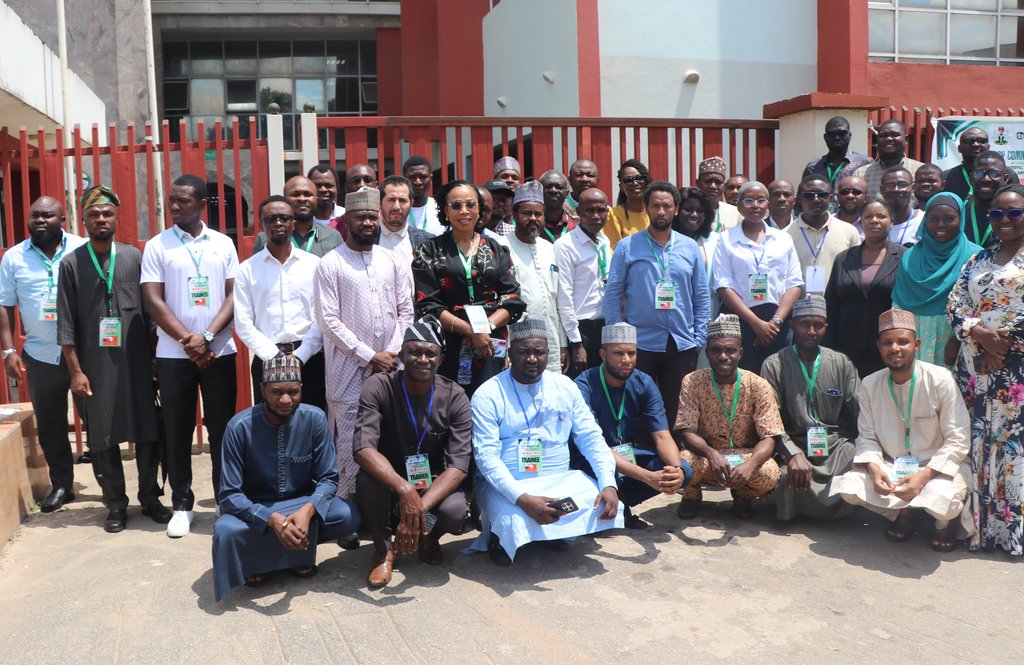
Imagine trying to plan a nation’s energy future when crucial data is scattered across ministries, outdated spreadsheets, and hard drives. This was the challenge at Nigeria’s first Energy Modelling Platform event, and we tackled it head-on in Abuja recently. In October 2025, Nigeria hosted its inaugural Energy Modelling Platform – Nigeria (EMP-N) training – a two-week intensive workshop at the Energy Commission headquarters in Abuja – bringing together local and international experts to support a just, sustainable energy transition. This country-specific EMP (the first of its kind) was convened by the Climate Compatible Growth (CCG) programme in partnership with the Energy Commission of Nigeria, World Resources Institute (WRI), Sustainable Energy for All (SEforALL), and the World Bank. The goal was clear: equip government analysts, academics, NGOs and private-sector practitioners with open-source tools and skills to map Nigeria’s energy future in line with development goals.
This wasn’t a beginner’s seminar. Each participant came prepared, having completed an Open University online course for their chosen modelling tool (e.g., MAED, CLEWS, OnSSET) before arriving in Abuja. That groundwork set the stage for two intensive weeks of in-person training – from October 6–16, 2025 – followed by a presentation day on October 17, where teams pitched their case-study findings to peers and decision-makers. There was no fee to attend and all tools were open-source, lowering barriers for institutions that can’t afford proprietary software.
For us at Kartoza, EMP-N was the latest chapter in a journey we've been on for years. We’ve been contributing to the Energy Modelling Platform since its early days – from the first Energy Modelling Platform for Africa training in Cape Town back in 2019 (where our team developed and taught all the GIS materials), to the annual global training schools (EMP-G) hosted in Trieste, Italy. In 2019, 2023, 2024, and 2025, Kartoza delivered specialised geospatial training at these global forums, helping participants effectively collect, manage, and govern geospatial data for sustainable energy planning. This long-term involvement meant we arrived in Abuja with a wealth of experience and proven workflows to share – and a lot of excitement to apply them in Nigeria’s context.
The geospatial data management track 🗺️
I had the opportunity to co-instruct the Geospatial Data Management for Energy Access Modelling and Planning track alongside Reiss Boafo. This track responded to a very real challenge in many low- and middle-income countries: energy-relevant geospatial data is often scattered, inconsistent and difficult to use. Population statistics, infrastructure maps, resource datasets and socio-economic indicators typically live in different institutions and formats, rarely updated and barely documented. Without coherent, quality-assured data, it’s extremely difficult to coordinate planning across agencies, mobilise financing for new infrastructure, or design policies that accurately target communities lacking reliable electricity or clean cooking options.
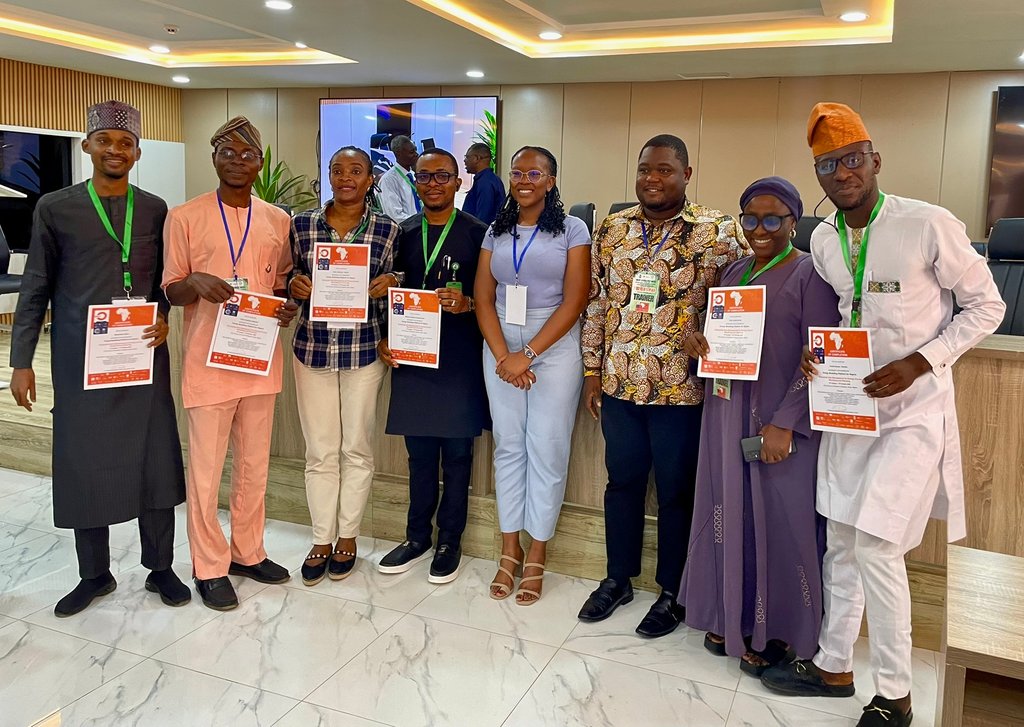
Our mission was to help participants turn this around. Over two weeks, we focused on building practical skills and workflows. We trained participants to use database and GIS software for managing, cleaning and documenting geospatial datasets (ensuring that data is not only collected, but usable). We showed how to design spatial data infrastructures (SDI) – including time-enabled and cloud-based data systems – that can support integrated planning across climate, land, energy, and water domains. And importantly, we worked on techniques to consolidate data from different sources into a single, accessible system for energy planning, instead of letting information live in siloed spreadsheets or PDF reports. All of the tools we used were free and open-source, lowering barriers to adoption. By the end of the first week (Tool Training), each participant had set up a basic spatial database and GIS project integrating multiple layers of their country’s data. During the second week (Case Studies), they refined these into focused analyses relevant to their jobs – whether it was mapping underserved villages for electrification or identifying regions to prioritise for clean cooking initiatives.
Working with real-world scenarios 📍
One of the strengths of this track was grounding learning in participants’ real-world contexts. We didn’t use abstract textbook examples or generic demo data. Instead, attendees brought their own national or institutional datasets and problem statements to the workshop. For example, some participants were tasked with pinpointing communities with poor energy access in a particular state; others needed to plan where to prioritise new grid connections versus off-grid solar systems; and some were concerned with locating areas lacking clean cooking fuels. Using these real scenarios meant that every exercise had an immediate payoff – people could directly see how improved data management and GIS techniques would help solve pressing questions back home.
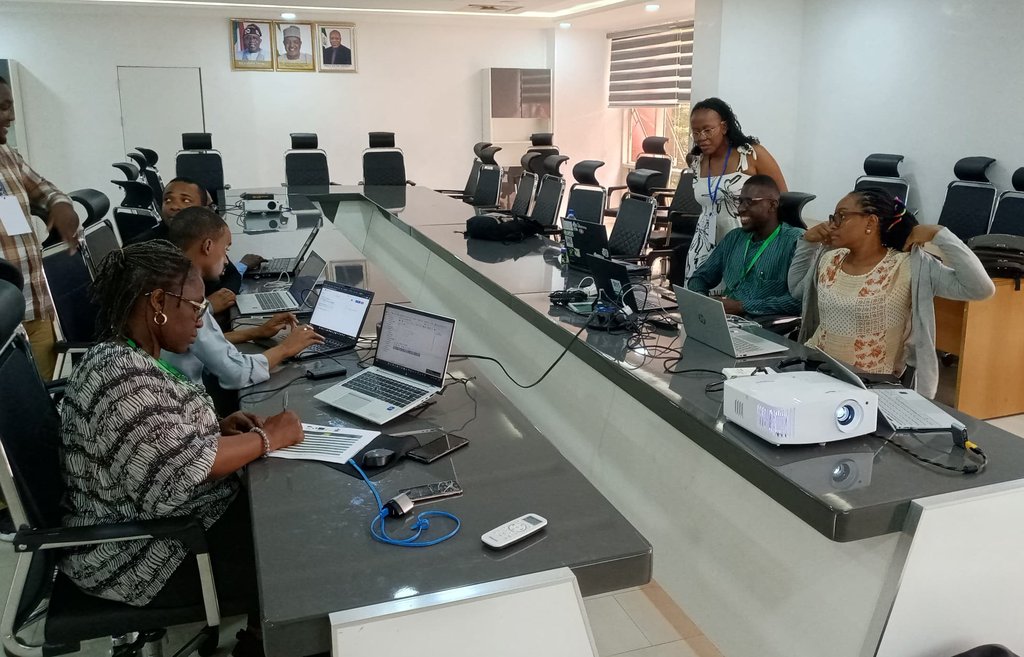
Throughout the training, we emphasised hands-on practice. If someone’s population data was in an outdated format or a messy spreadsheet, we walked through converting and cleaning it in QGIS and PostgreSQL/PostGIS. If another had separate shapefiles for health facilities and schools that needed overlaying with electrification rates, we helped them merge and analyse those layers. By iterating on their data, participants weren’t just learning generic skills; they were actively improving the datasets they would continue using after the workshop. This approach also sparked rich discussions about data gaps and inconsistencies – for instance, discovering that the national grid map from one ministry didn’t line up with what the utility company had. Those conversations underscored why better data management is so critical. It’s not just a tech exercise; it directly affects the accuracy of planning. As one participant noted during a group discussion, “We can’t solve a problem we can’t see on the map.”
Another key aspect was encouraging collaboration. Participants from different organisations, the ministry, the rural electrification agency, the statistics bureau, and international NGOs found themselves comparing notes and sharing data. In some cases, people realised that another agency at the table had a dataset they’d been searching for! By the end of the two weeks, new channels of communication were opening up among these data providers and users, which is exactly what’s needed to break down the silos in energy planning.
Leaving with a data governance mindset 🧠
We made sure the course didn’t stop at tools and techniques. Equally important was the “data governance” mindset, thinking about who owns which data, how it’s shared, how often it’s updated and what standards everyone should follow. After all, there’s little point in cleaning up data if it will just become inconsistent again in a year. So we led discussions on establishing clear data responsibilities within institutions, setting up regular data updates and using open standards so that different systems (and agencies) can interoperate.
By the end of the training, many participants told us they felt inspired and motivated to push for change in how their organisations handle data. They planned to advocate for stronger data governance policies, for example, creating central repositories or geospatial databases instead of a patchwork of spreadsheet files, and to champion the value of open-data sharing between ministries. Several participants noted that they finally had a concrete vision of a unified energy data system for Nigeria, rather than the fragmented status quo.
Crucially, attendees left determined to apply these new methodologies immediately to their ongoing projects. They now had the skills (and confidence) to turn raw data into actionable insights, and they were eager to ensure upcoming decisions on energy investments would be based on evidence, not guesswork. In practice, this means they can start answering the kinds of questions that are at the heart of energy equity: Who still lacks reliable electricity or clean cooking technology? Where should we prioritise new investments? How will today’s decisions affect vulnerable communities 10–20 years from now? 🌱
It was rewarding for us as instructors to see this shift. The group wasn’t just walking away with technical know-how; they were leaving with a new perspective on data’s role in policy. One government analyst, for instance, said he would brief his director on the need for a dedicated GIS unit to maintain these datasets. Another team planned to set up a shared online platform for energy data when they got back to their office. These are small but significant steps toward an environment where planners and decision-makers can rely on good data governance as a foundation for good energy planning.
Why EMP-N matters 🌍✨
EMP-N 2025 was more than a one-off training seminar; it’s part of a much broader effort to transform energy planning through local capacity building. By hosting a country-specific Energy Modelling Platform, Nigeria has taken ownership of its energy modelling and data in a way that simply wasn’t happening when all training was at the regional level. Participants weren’t just learning software; they were becoming part of a growing community of practice, connecting technical work with real-world policy and investment decisions. The relationships forged during those two weeks between government agencies, researchers, and international partners are meant to continue long after the workshop ends, enabling ongoing collaboration and knowledge-sharing.
From our perspective at Kartoza, being involved in EMP-N 2025 was a powerful reminder that behind every effective energy plan is a foundation of reliable data and skilled people. We are proud to have contributed to this initiative and to see how it builds on the momentum of previous EMP engagements. Kartoza remains dedicated to advancing the capabilities of professionals in the energy sector, ensuring they are well-equipped to address the challenges of energy access and sustainability in emerging economies. As the EMP-N participants return to their institutions, the real work begins: turning what was learned in Abuja into lasting improvements in how energy data is collected, governed, and used to achieve universal, equitable energy access. 💡🤝
In summary, Nigeria’s first Energy Modelling Platform was a milestone in bridging data and policy for sustainable energy. It brought home the lesson that open-source tools and good data practices can empower local experts to drive change. And it reinforced something we’ve seen time and again in our years of EMP involvement: when you give talented people the right tools and training, they can map out solutions to even the toughest energy challenges. The future, much like a good map, is looking a lot clearer.
Links to our previous related articles: For more on our long-term work in this area, check out our posts on the EMP-G Joint Global Training 2019–2025 and the EMP-Africa 2019 training in Cape Town, where we first developed many of the geospatial approaches we brought to Nigeria. Each event has been a learning experience that feeds into the next, and we’re excited to continue supporting these efforts across the globe.



No comments yet. Login to start a new discussion Start a new discussion